
Pioneering Generative Email, Unlocking Time Savings and 1:1 Personalization
CONTEXT:
After the success of AI Journeys (SMS), we explored bringing AI to email. Clients consistently told us managing email programs was painful. Brands wanted personalization but lacked the bandwidth to create and maintain multiple versions of an email.
DISCOVERY & USER INSIGHT:
We kicked off the project in the New York office, ideating on the whiteboard until we identified themes.

After discussing business goals and engineering feasibility, we chose three directions to validate with customer research.
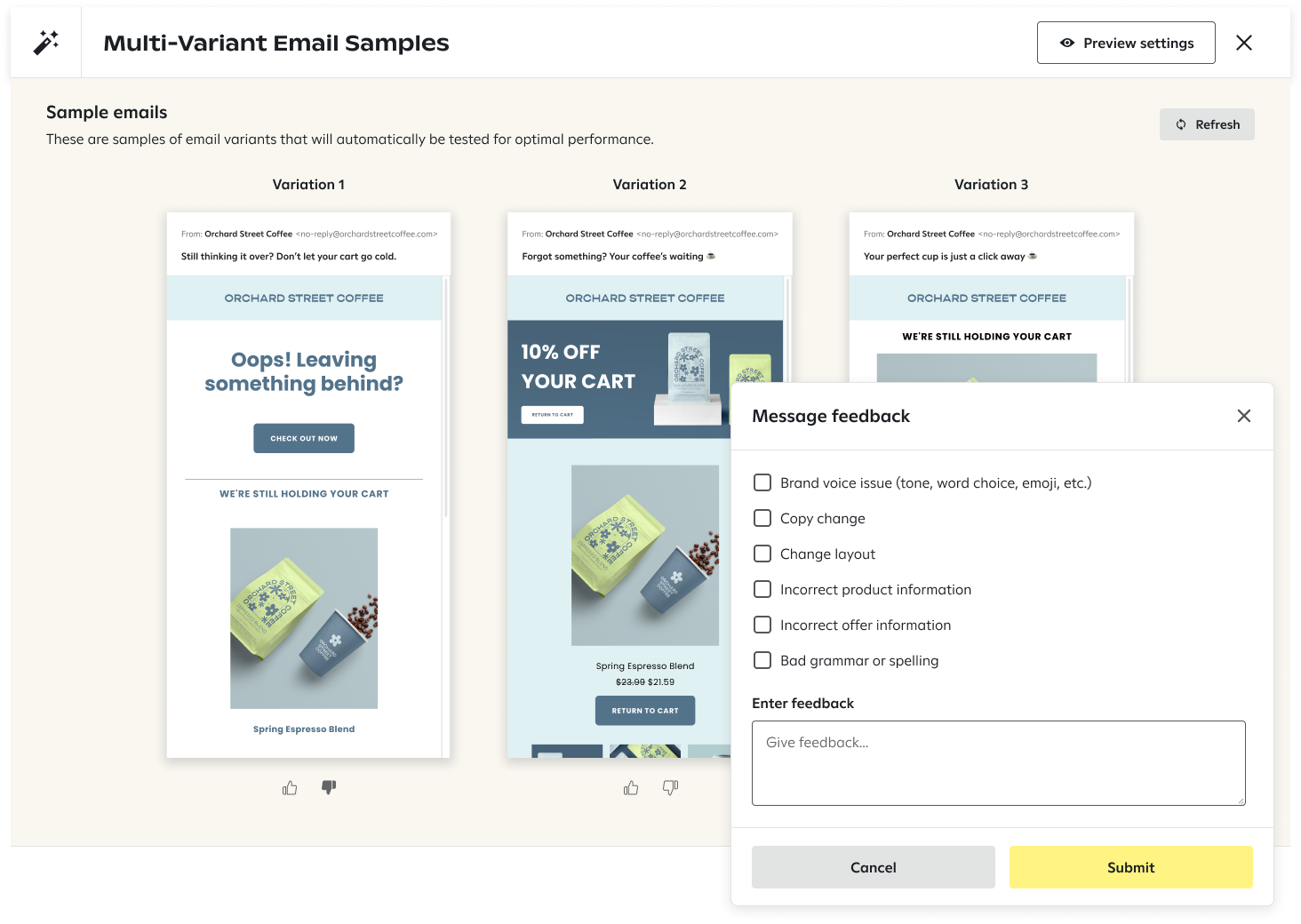
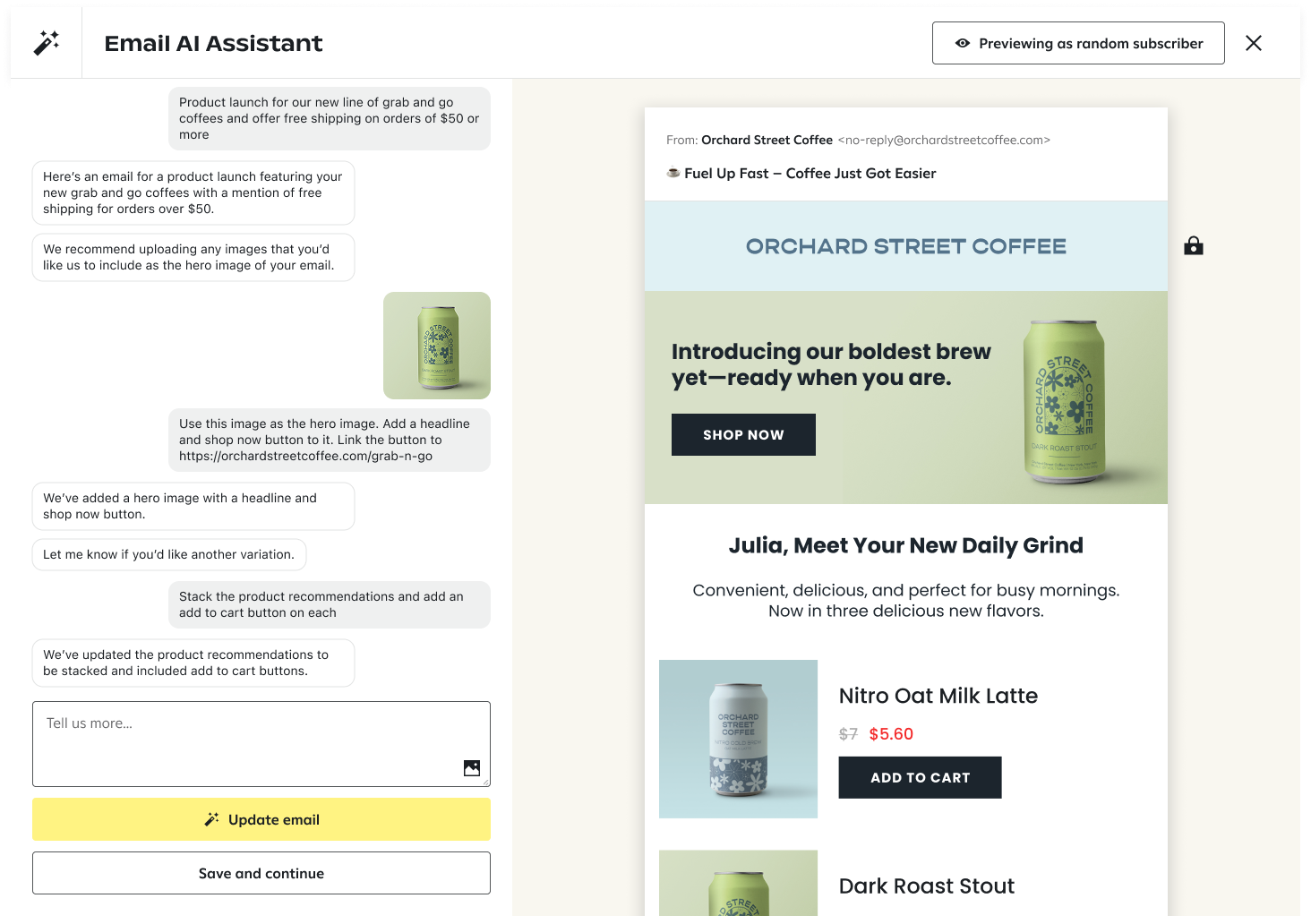
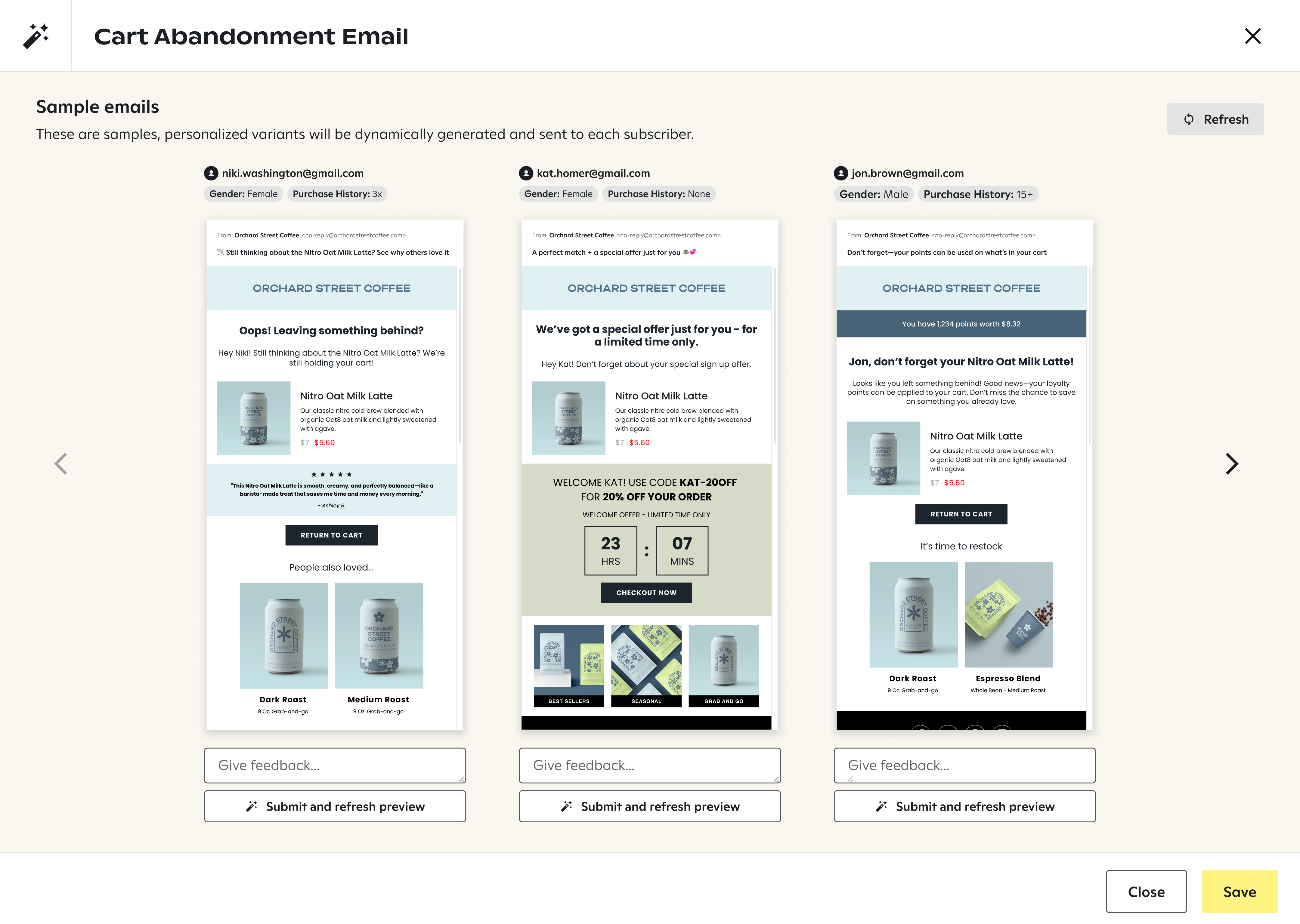
Clients were interested in all three prototypes, but Content Personalization stood out as the most frictionless to adopt and the most likely to drive meaningful performance. The others had what I like to call “AI buzz factor”—interesting in theory, but don't seamlessly fit or alleviate existing workflows. In AI product development, it’s critical to identify where tools genuinely make users’ lives easier.
PRODUCT EXECUTION:
Automating email content is complex, so we intentionally rolled this out in phases to reduce risk, build trust, and prove performance at each step.
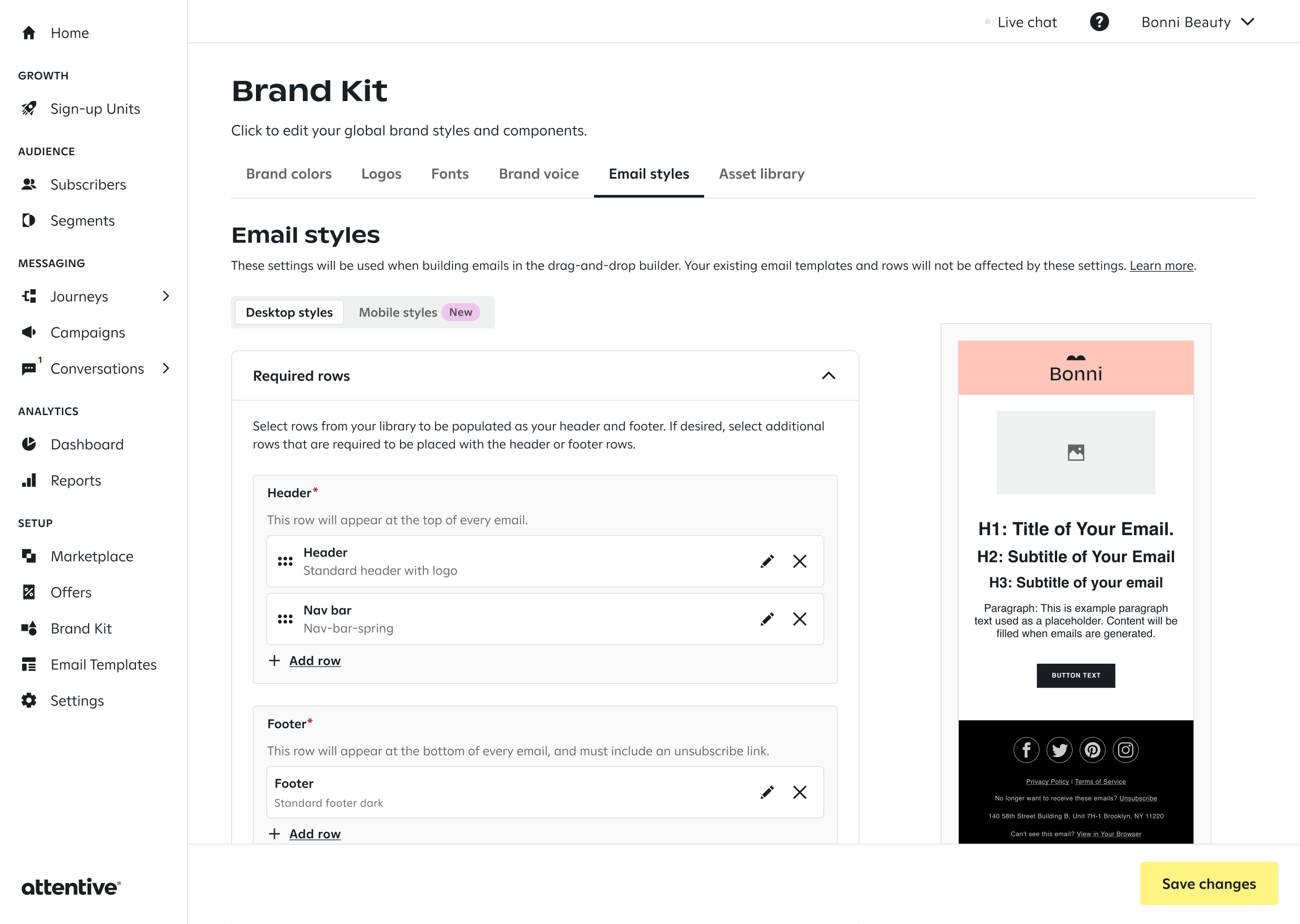
Phase 1: Email Brand Styles
Purpose: Build client trust and ensure brand control before introducing automation. Brand styling (fonts, colors) is highly sensitive for marketers. Clients were not comfortable with AI making autonomous brand decisions.
Solution: We built a manual style form that gives clients and account managers full control over email branding. This increases trust in the product and created a scalable foundation for automated template generation. We currently have 120 clients in the email brand styles beta.
Phase 2: Seed Templates
Purpose: Ensure AI-generated emails start from proven, high-performing structures.
Solution: We analyzed historically high-performing rows, filtered by technical feasibility, and used that data to build a library of seed templates. That same row-level logic became the foundation for row taxonomies: guardrails that let the model generate more dynamic templates while staying accurate and on-brand.
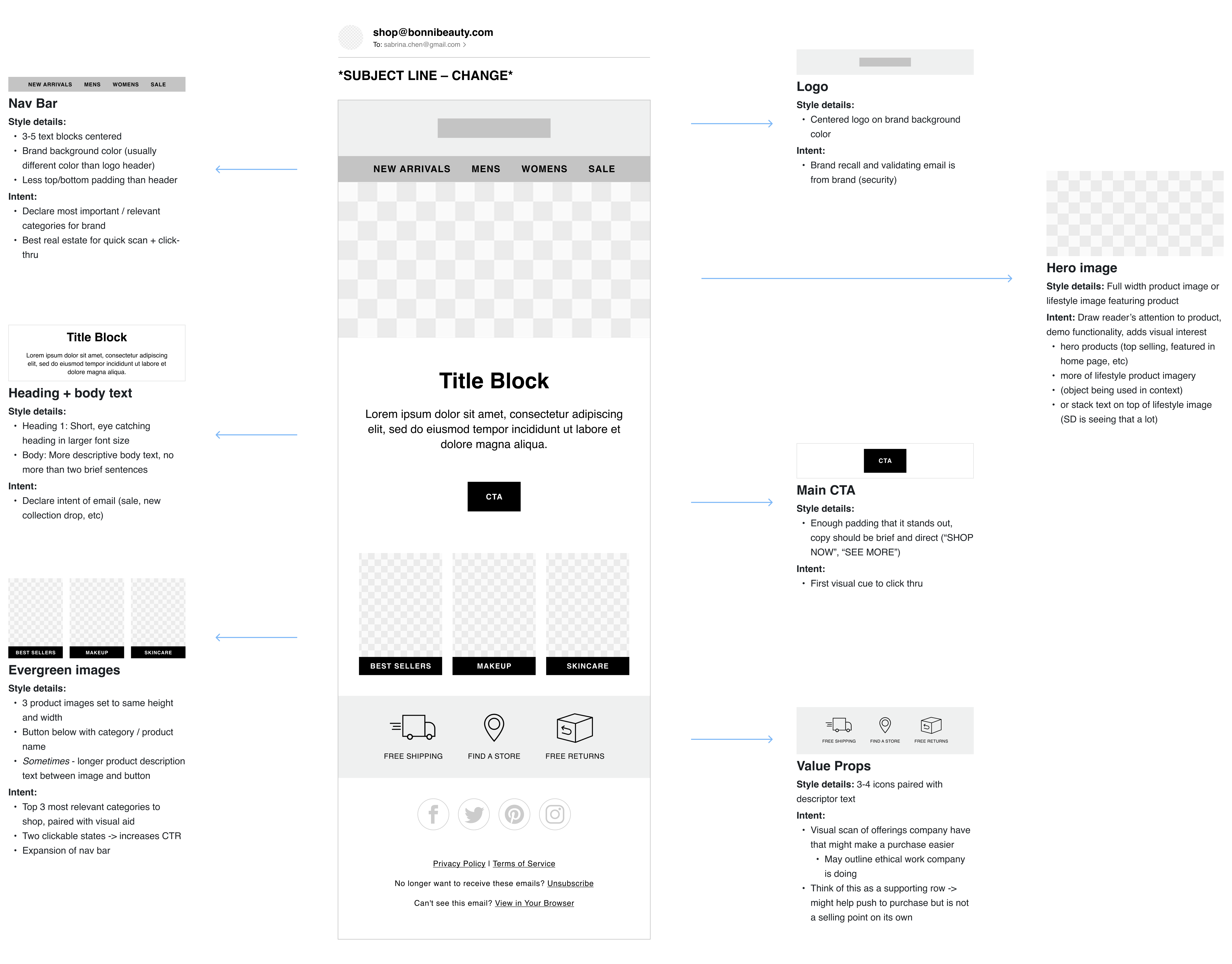
Then, we built a library of “seed templates” to power generative email creation for eight different journey triggers.

Phase 3: Testing with Private Alpha
Purpose: To validate our first round of generative templates, we recruited AI-forward clients that were willing to test our generative templates with real subscribers.
Solution: We helped brands set up their styles, and they ran A/B tests comparing generated templates to their existing templates. In one journey sent to 51,931 subscribers, the AI-generated templates came within 3.73 percentage points of the brand’s CTR — despite competing against historic, manually built emails.
Quoted from one client, "So far, the generated emails are running about 1–2% below the original. I was pleasantly surprised by how well they are doing against our existing emails."
Phase 4: Unlocking 1:1 Personalization
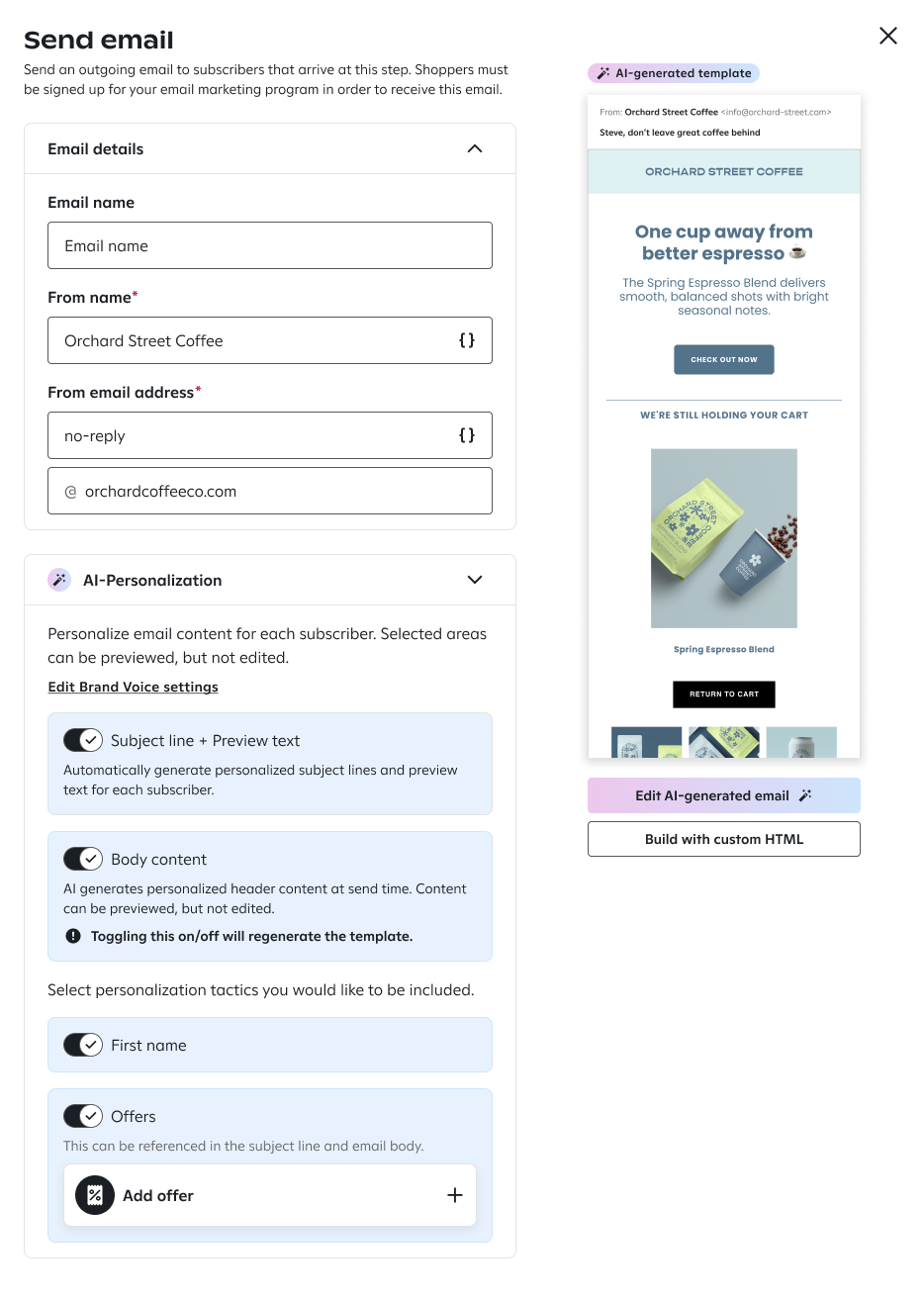
Purpose: Build on the template generation foundation by introducing meaningful personalization in journey emails, focusing on elements clients found valuable and easy to adopt.
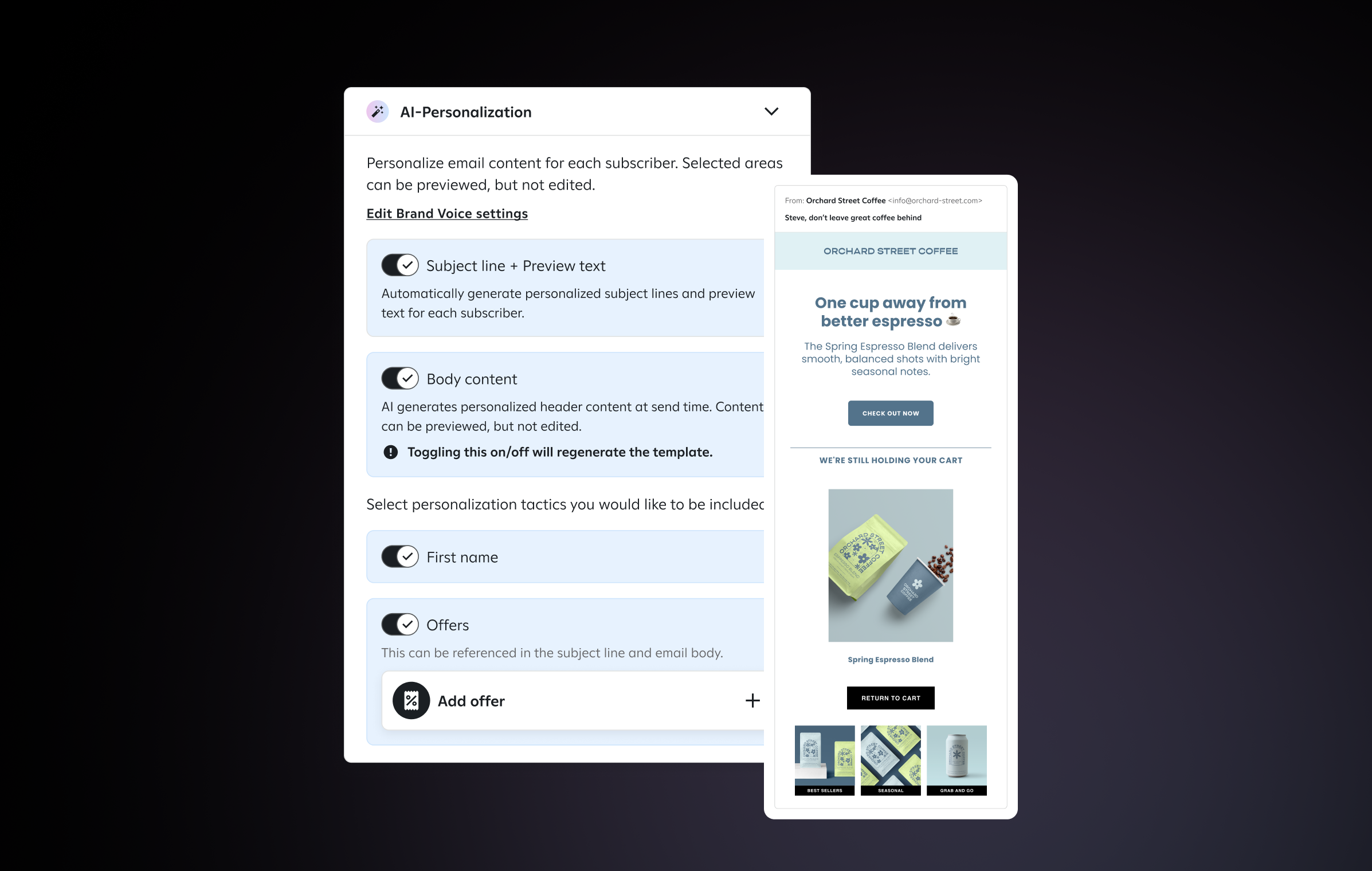
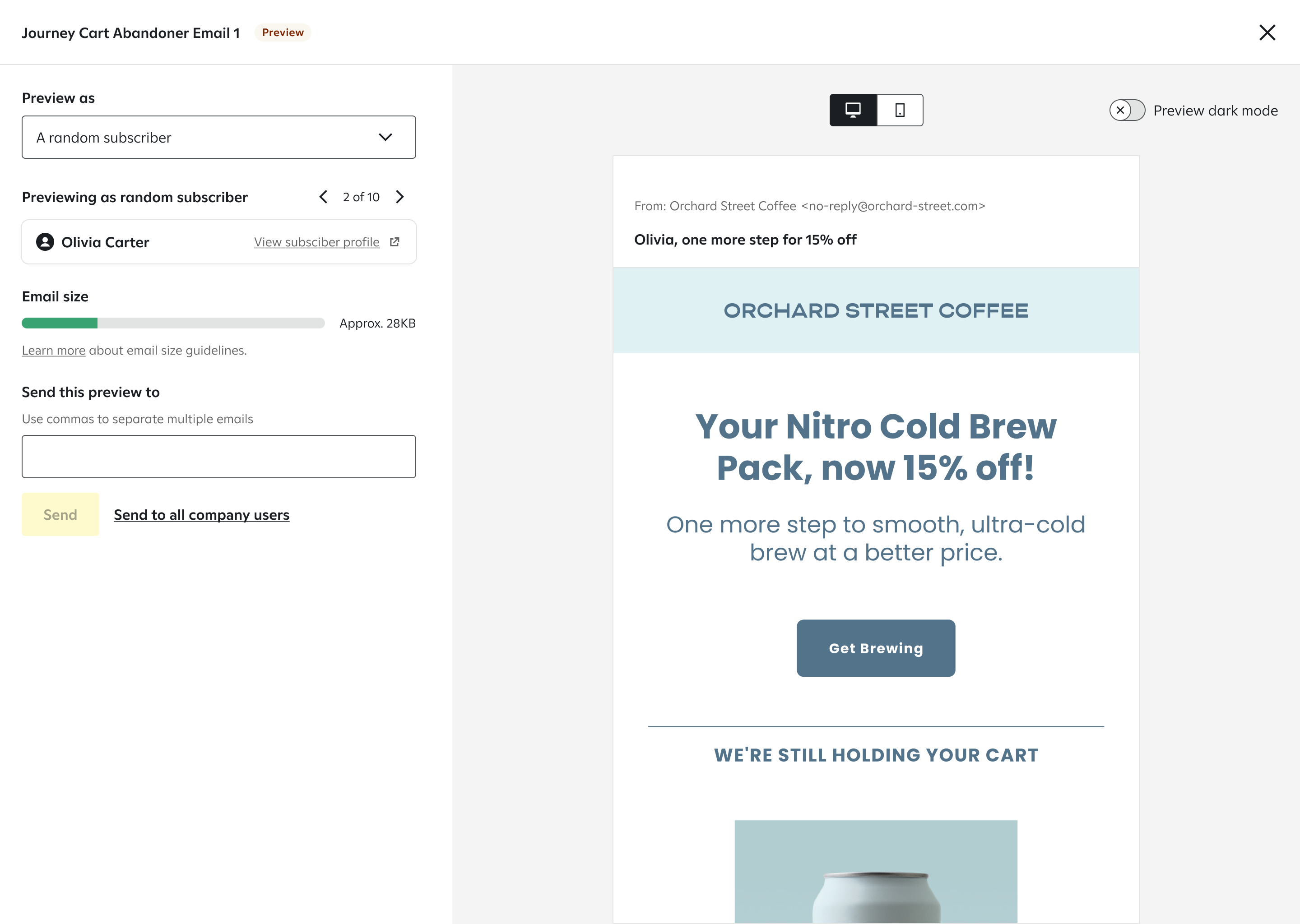
Solution: Personalized copy is generated with enabled tactics (e.g., offers, first name, triggering product), with toggles that allow clients to experiment and adopt at their own pace.
IMPACT
AI-generated subject lines and content drove a 17.1% lift in total open rate and a 5.0% lift in click-through rate — both statistically significant across tens of thousands of sends for copy personalization. Over 837,101 subscribers have received AI-generated content in an email send. Early results demonstrate a 56% reduction in edit actions for alpha clients using template generation (25 edits → 11 edits).
This template generation work laid the foundation for the next phase of our email platform. We're now building toward agentic message creation, allowing users to automate tedious tasks and unlock valuable time to accompish their program goals.